5 Signs of Hidden Water Damage in Anderson Homes (And What to Do)
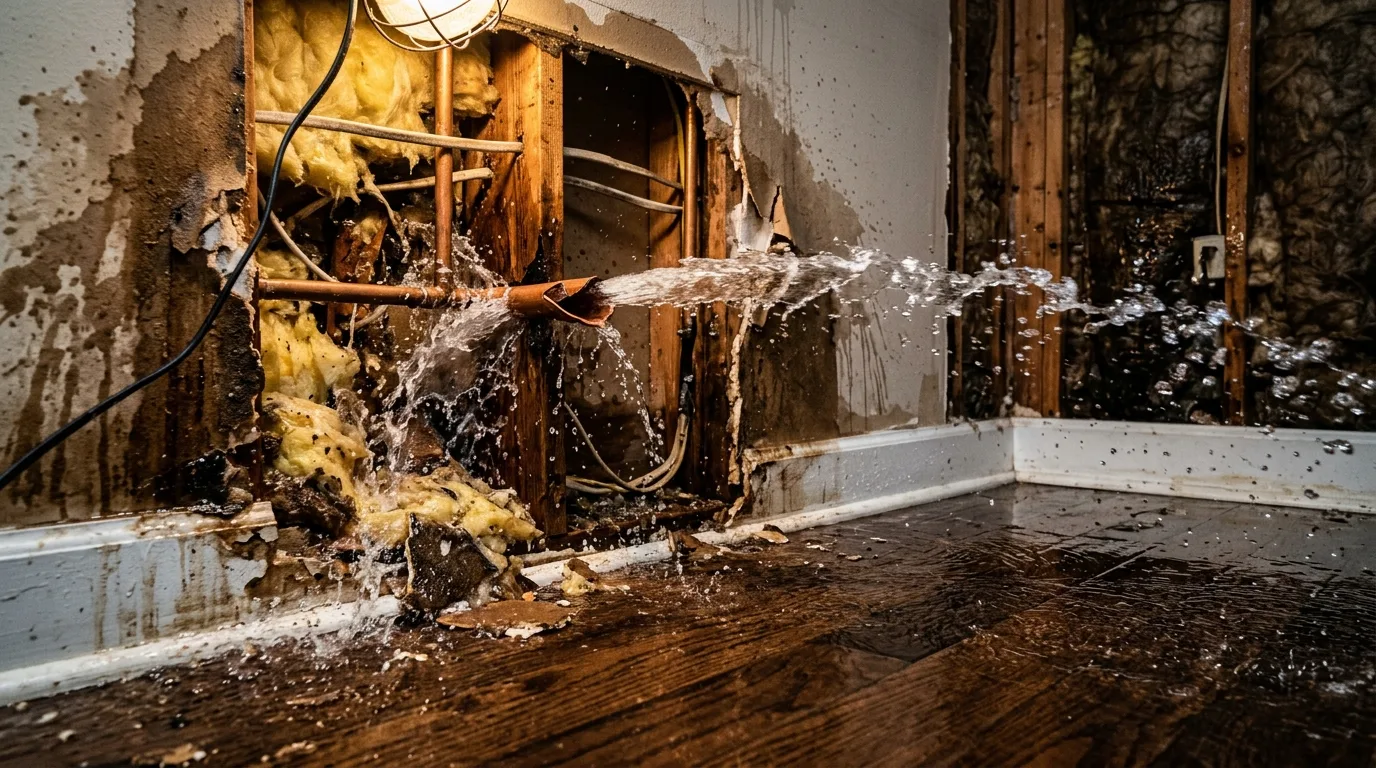
Many Anderson homeowners only discover water damage when it has already progressed far beyond the initial source. A slow pipe leak behind a wall, persistent crawl space moisture, or a small roof penetration can cause thousands of dollars in structural damage and mold remediation costs before there’s any visible sign of a problem. In Anderson’s humid subtropical climate — where moisture already saturates building materials at higher levels than in drier regions — hidden water damage accelerates faster than it would anywhere else in the country.
In this post, we cover the 5 most reliable signs that your Anderson home has active water damage happening right now, why each sign matters in Anderson’s specific climate, and what to do when you identify them.
Suspect Hidden Water Damage in Anderson? Get a Free Assessment
Anderson Water Damage Pros inspects homes across Anderson County — identifying damage before it becomes a major restoration project. Call (877) 698-1311.
Why Hidden Water Damage Is Especially Risky in Anderson
Anderson’s subtropical climate creates conditions where hidden water damage progresses particularly rapidly. With 48 inches of annual rainfall and summer humidity consistently above 65%, building materials in Anderson homes carry a higher baseline moisture content than in drier climates. When a slow leak adds additional moisture to these already-elevated levels, the material doesn’t need much additional water to cross the threshold into mold territory — and mold colonization begins within 48–72 hours once conditions are right.
Older Anderson homes — particularly those in the Westview Heights area and throughout the Downtown Historic District — have a second hidden moisture pathway unique to the Upstate SC Piedmont: clay soil ground moisture that continuously evaporates into unencapsulated crawl spaces. Homeowners in these neighborhoods may notice signs of hidden water damage in their floors and lower walls that have nothing to do with a burst pipe — they’re the result of years of chronic crawl space moisture working its way upward through the structure.
Sign 1: Musty Smell Without Visible Mold
A persistent musty odor that doesn’t improve with ventilation is one of the most reliable indicators of active mold growth somewhere in your Anderson home’s structure. Mold produces volatile organic compounds (MVOCs) that create the distinctive earthy, musty smell — and these compounds can travel through wall cavities, ductwork, and subflooring to reach living spaces long before visible mold appears on surfaces.
In Anderson homes, this smell most commonly originates in crawl spaces, inside wall cavities behind wet drywall, or in attic spaces where roof leaks have been developing slowly. Don’t dismiss this sign. A musty odor that reappears after airing out or running fans indicates an active moisture source, not a past event that has resolved. Have a professional assess the crawl space and wall moisture levels with calibrated meters.
Sign 2: Soft Spots or Bouncy Floors
Floor areas that feel soft, spongy, or springy underfoot — particularly in bathrooms, kitchens, laundry rooms, and areas above crawl spaces — indicate subfloor deterioration from water damage. In Anderson homes with wood subfloor construction (the majority of pre-2000 residential construction in the area), chronic moisture absorption causes the OSB or plywood subfloor to delaminate and lose structural integrity.
This sign is particularly common in Anderson neighborhoods built in the 1960s through 1990s, when OSB subfloor was standard. Homes in the Northlake area and older sections of West Anderson with unencapsulated crawl spaces frequently develop soft floors as clay soil moisture feeds crawl space humidity that saturates the subfloor from below — slowly, without any visible water event. By the time floors feel soft, the subfloor has typically been absorbing moisture for months or years.
Soft Floors or Musty Smell in Your Anderson Home?
These are signs of hidden water damage. Call (877) 698-1311 for a professional assessment — we identify the source and scope before recommending a solution.
Sign 3: Peeling Paint or Wallpaper
Paint and wallpaper that bubbles, peels, or develops a blistered appearance on walls or ceilings — particularly in areas without plumbing above them — indicate moisture migrating through building materials. In Anderson homes, this commonly originates from three sources: slow pipe leaks inside wall cavities, condensation on poorly insulated exterior walls during Anderson’s humid summers, or attic moisture from inadequate ventilation that pushes damp air down through ceiling materials.
Look specifically for peeling on interior walls that share a partition with a bathroom, kitchen, or laundry room. Also look for peeling on exterior walls in lower rooms — this can indicate moisture vapor from crawl spaces migrating upward through wall assemblies. Any peeling in a room that doesn’t have a plumbing fixture nearby warrants investigation of the crawl space below or the roof above.
Sign 4: Stains on Ceilings or Walls
Brown or yellowish ring stains on ceilings are the classic sign of a roof or plumbing leak above. In Anderson’s climate, the critical thing to understand about these stains is that they indicate a completed moisture event — water entered, left a mineral deposit as it dried, and the stain remained. But the stain does not tell you whether the leak has stopped. In many Anderson homes, a roof penetration that caused a ceiling stain during one storm event will leak again during the next.
Wall stains below windows, along baseboards, or at the junction of floor and wall indicate water entry at those specific points — often from window seal failures, exterior grade that slopes toward the foundation, or rising damp from crawl space moisture. In the older concrete block construction common in parts of Downtown Anderson, efflorescence (white chalky salt deposits) on block walls indicates water passing through the block from outside.
Sign 5: Visible Mold in Isolated Areas
Finding mold in a bathroom tile grout or around a shower is expected and usually cosmetic — normal bathroom humidity produces surface mold that cleaning prevents. The concerning sign is mold in unusual places: inside a closet against an exterior wall, under kitchen sink cabinets, around HVAC registers, or in corners of lower rooms.
Mold in these locations indicates moisture sources beyond normal bathroom humidity. Closet mold against exterior walls indicates thermal bridging — the wall is cold enough that Anderson’s humid air condenses on it. Mold under kitchen or bathroom sinks often indicates a slow drain or supply leak. Mold around HVAC registers can mean condensation issues in the ductwork — a common problem in Anderson during the transition from heating to cooling season when cold ducts run through humid attic spaces.
What to Do When You Find These Signs
Document what you’re seeing with photographs before touching anything. If you find more than one of these signs in the same area of your home, the likelihood of active structural water damage is high. Call Anderson Water Damage Pros for a professional assessment — we use thermal imaging cameras and calibrated moisture meters to identify the full extent and source of moisture invisible to the naked eye.
Don’t attempt to simply repaint over stains or replace isolated flooring sections without addressing the moisture source — in Anderson’s climate, surface repairs over active moisture will fail within weeks as the underlying damage continues progressing.
Frequently Asked Questions
Can I test for hidden water damage myself in Anderson?
Inexpensive pin-type moisture meters (available at hardware stores) can give you a rough indication of elevated moisture in accessible wood surfaces like baseboards and window trim. However, they don’t penetrate wall cavities or assess moisture inside structural materials effectively. Professional assessment uses both pin meters and non-invasive thermal cameras that reveal cold spots where moisture has infiltrated — far more reliable than surface-only measurements. For an accurate picture of what’s happening inside your Anderson home’s structure, a professional assessment is the only reliable option.
How much does it cost to assess hidden water damage in Anderson?
Anderson Water Damage Pros provides free assessments for Anderson County properties. We prefer to identify damage early — when it’s smaller and less expensive to address — rather than waiting for homeowners to call only after damage has progressed significantly. Early identification of a slow pipe leak behind a wall costs far less to repair than a mold remediation project that develops from the same leak discovered six months later.
Does hidden water damage affect my home’s sale value in Anderson?
Yes, significantly. South Carolina real estate requires disclosure of known defects including water damage history. Hidden water damage that is discovered during a buyer’s inspection will either kill a sale or require a significant price reduction and documentation of completed remediation. Having a professional assessment and remediation completed — with documentation — before listing protects your sale price and makes the transaction smoother. See our guide on water damage restoration in Anderson SC for what the remediation process involves.
Related:
- Mold after water damage: why 48 hours matters in Anderson’s climate
- Crawl space water damage in Anderson SC
- Water damage restoration in Anderson SC
Don't Let Hidden Water Damage Grow in Your Anderson Home
Free professional assessments using thermal imaging and moisture meters. Call (877) 698-1311 to schedule an inspection anywhere in Anderson County.