What to Do When a Pipe Bursts in Your Anderson Home
A pipe has just burst in your Anderson home. Water is spraying or pooling rapidly, and you have seconds to decide what to do. The actions you take in the first five minutes will determine how much of your home is damaged — and how much your restoration costs.
In this post, we cover the exact steps to take in the first minutes after a burst pipe, what not to do (common mistakes that make damage worse), and what to expect from professional water extraction in Anderson.
Burst Pipe in Anderson? Call Now — 24/7 Emergency Dispatch
Anderson Water Damage Pros arrives within 60 minutes. Don't wait — every minute of delay increases damage. Call (877) 698-1311.
Why Burst Pipes Are an Emergency in Anderson’s Climate
By the time January lows average 31°F in Anderson, overnight freeze risk is real — and homes that experience a freeze-thaw event in a single 24-hour period can have burst pipes by morning. The combination of frozen water expanding inside pipes and then rapidly warming creates pressure spikes that rupture copper, PVC, and galvanized steel lines with equal opportunity.
What makes a burst pipe particularly damaging in Anderson is the rate at which water spreads in this climate. Anderson’s humidity slows natural evaporation and drying significantly. Water that soaks into subflooring, drywall, and insulation in a low-humidity climate might dry partially on its own over days — in Anderson’s subtropical conditions, it simply stays saturated, creating ideal mold conditions within 48 hours.
Steps to Take Immediately After a Pipe Bursts
Step 1 — Shut off the main water supply. Your main water shutoff is typically located near the water meter, which in Anderson is often at the street or near the foundation. Turn it clockwise to close. If you don’t know where your shutoff is, find it now — before you need it. A burst supply line that continues flowing for 10 minutes can deliver hundreds of gallons into your home.
Step 2 — Turn off the electricity in affected areas. If water has reached any area near electrical outlets, panels, or appliances, shut off the breaker for those areas at your main panel. Do not enter standing water if electricity may be active in the area.
Step 3 — Call Anderson Water Damage Pros at (877) 698-1311. Dispatch is available 24 hours a day. Call while you’re completing the other steps — don’t wait until you’ve mopped up what you can. The sooner extraction equipment arrives, the less total damage you’ll have.
Step 4 — Document before any cleanup. Take photographs and video of the standing water, the burst pipe or affected area, and any visible damage to walls, flooring, and belongings. This documentation is required by your insurance company. The more thorough your documentation, the faster and more complete your claim will be.
Step 5 — Move valuables and electronics. If it’s safe to do so, move furniture, electronics, documents, and other valuables out of the affected area. Place aluminum foil or wood blocks under furniture legs on wet carpet to prevent rust and dye staining.
Step 6 — Do not run fans or HVAC. A common instinct is to run fans to dry things out. Don’t. Household fans push contaminated air through your home and do not address moisture inside walls and structural materials. Your HVAC system can spread mold spores if mold is already developing. Professional equipment handles drying correctly.
Water Extraction Team on the Way to Anderson
We arrive within 60 minutes for burst pipe emergencies throughout Anderson County. Call (877) 698-1311 now.
Types of Pipes That Burst in Anderson Homes
Copper pipes are common in older Anderson homes, including many in the Downtown Historic District and West Anderson area. Copper can develop pinhole leaks before a full burst — watch for water stains on ceilings and walls in winter. Copper is vulnerable to freezing when exterior walls are poorly insulated.
PVC and CPVC are more common in newer construction. CPVC is more brittle than PVC and more likely to crack from freeze pressure. Homes in newer Powdersville developments often have CPVC that handles normal pressure well but can fail at pipe joints during a freeze event.
Galvanized steel pipes are found in the oldest Anderson homes. Galvanized pipes corrode from the inside over decades, narrowing the interior diameter and weakening the pipe walls — making them more susceptible to burst when water freezes inside them.
How the Restoration Process Works After a Burst Pipe
Once our team arrives, the restoration process follows a structured sequence:
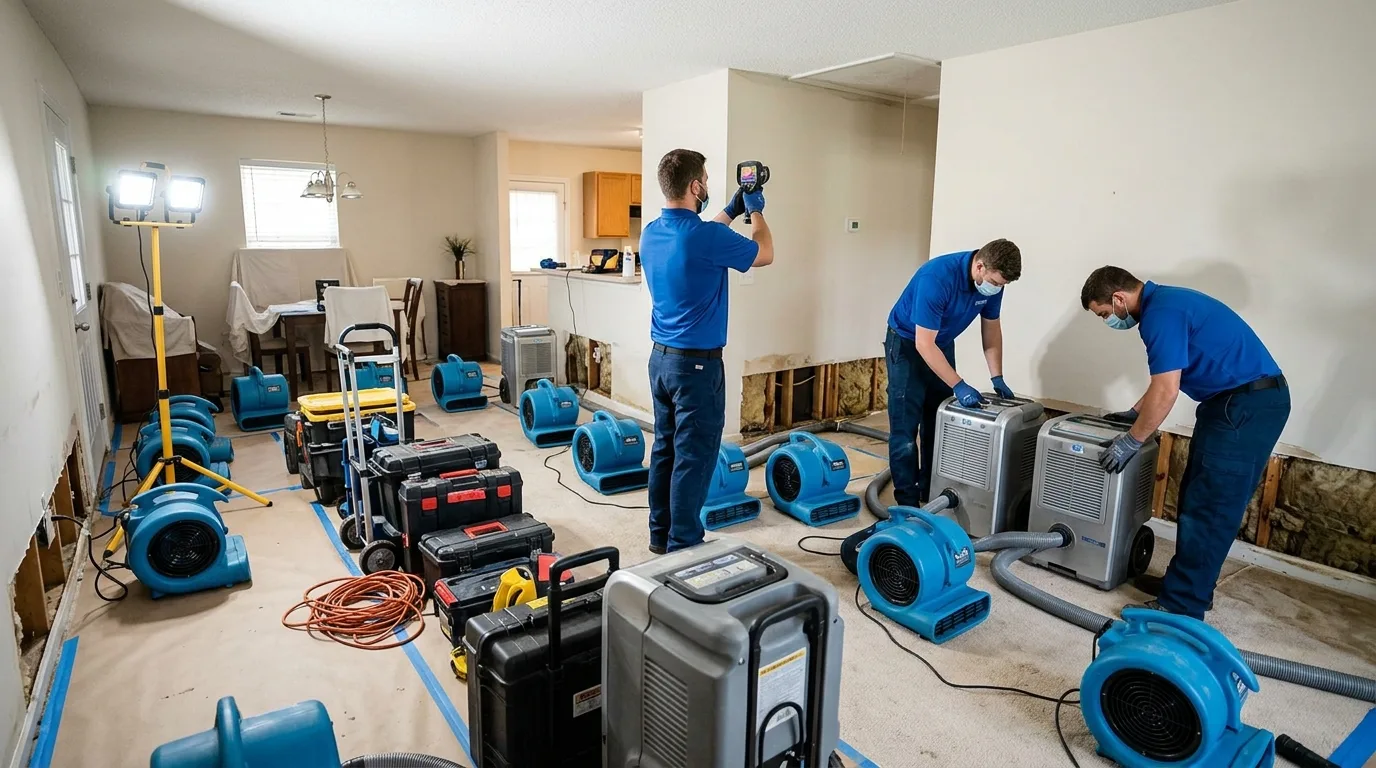
- Assessment: Moisture meters and thermal imaging cameras map the full extent of water migration — water from a burst pipe routinely travels far beyond the visible damage zone.
- Extraction: Truck-mounted extractors remove standing water; specialized tools pull moisture from carpet, padding, and hardwood flooring.
- Structural drying: Commercial dehumidifiers and high-velocity air movers run for 3–5 days, monitored by daily moisture readings. Anderson’s humidity means drying takes longer here than in drier climates — this is not a place to cut the drying time short.
- Documentation: Every step is documented for your insurance claim — extraction volume, drying readings, equipment used, and final clearance moisture levels.
Cost of Burst Pipe Water Damage Restoration in Anderson
Burst pipe water damage restoration in Anderson typically costs $2,044–$2,159 for a standard single-room event of approximately 215 square feet. Larger events that affect multiple rooms or penetrate into crawl spaces in older Anderson homes will cost more. Standard homeowners insurance covers sudden and accidental water damage from a burst pipe — your policy will cover extraction and drying costs, and may cover reconstruction depending on your deductible and coverage limits.
Frequently Asked Questions
How quickly does water damage spread from a burst pipe in Anderson?
Water spreads faster in Anderson than in drier climates because the building materials are already at higher baseline moisture content from the humid subtropical environment. A burst supply line delivering 10–15 gallons per minute (typical household water pressure) will flood a standard room within minutes. Water then begins migrating into subflooring and wall cavities. In Anderson’s heat and humidity, mold colonization can begin within 48 hours on wet surfaces — making every hour of delay significant.
Will my homeowners insurance cover a burst pipe in Anderson?
Standard homeowners insurance in South Carolina covers sudden and accidental water damage from a burst pipe. The key word is “sudden” — insurance does not cover gradual leaks that were neglected. Document the cause of the pipe burst as part of your claim. Your insurer will want to verify that the damage was not from a pre-existing condition you were aware of. Our insurance claim guide for South Carolina covers the specific steps for Anderson homeowners.
How do I prevent pipes from bursting in my Anderson home during winter?
Anderson averages a January low of 31°F — cold enough for pipe freezes, but mild enough that many Anderson homeowners underestimate winter pipe risk. Key prevention steps: insulate pipes in unheated spaces (attics, crawl spaces, exterior walls), let faucets drip during overnight freeze events, disconnect garden hoses, and keep the home above 55°F even when away. Older Anderson homes with crawl spaces are particularly vulnerable — pipe freeze in an unheated crawl space is a common source of burst pipe calls in January and February.
Related:
- Emergency water extraction in Anderson SC
- Water damage restoration Anderson SC: complete guide
- Winter water damage: preventing frozen pipes in Upstate SC
Burst Pipe Restored — Anderson Water Damage Pros
IICRC-certified extraction and structural drying for burst pipe emergencies in Anderson County. Call (877) 698-1311 — 24/7 response.