Winter Water Damage: Preventing Frozen Pipes in Upstate SC
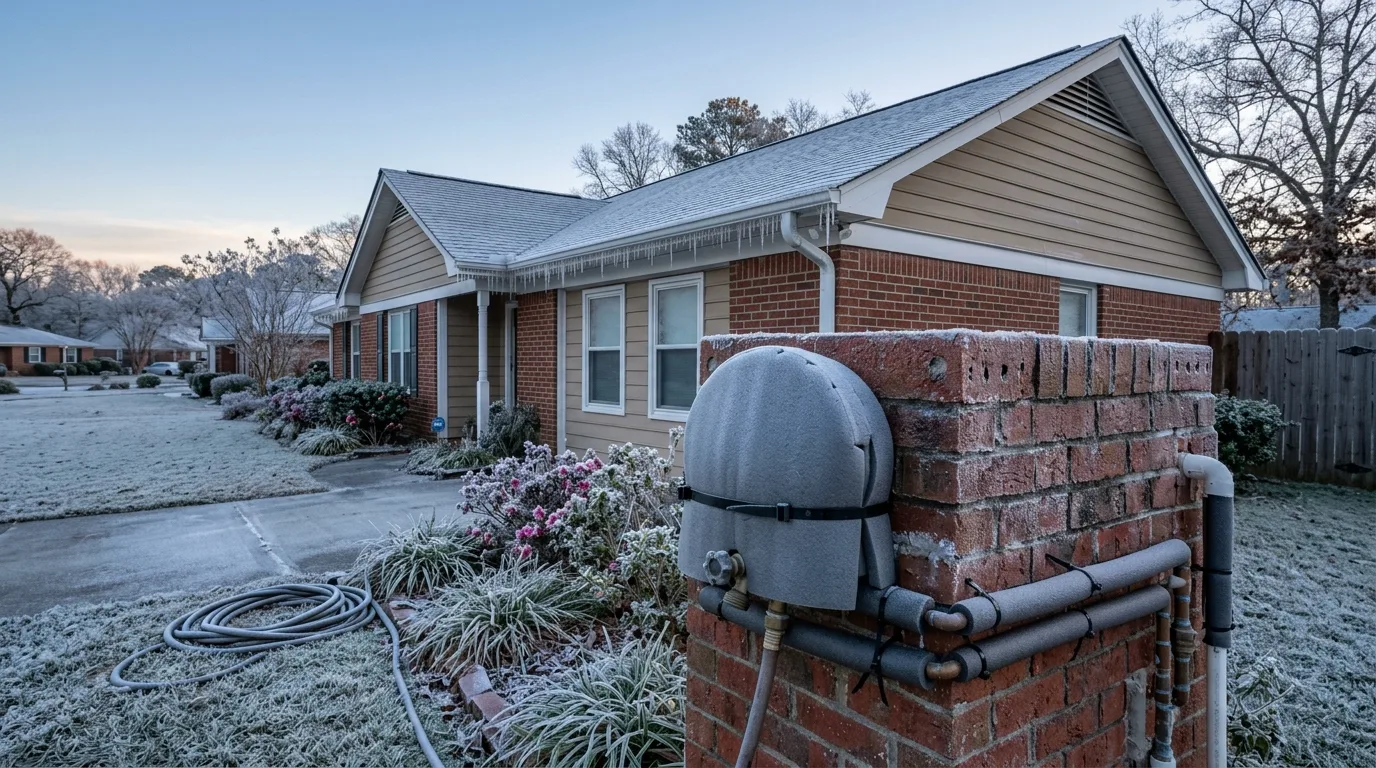
Anderson homeowners often underestimate winter pipe freeze risk because the city’s climate is generally mild — average December highs are in the upper 50s°F, and extended freezes are uncommon. But Anderson’s average January overnight low of 31°F is cold enough to freeze unprotected pipes in exposed locations, and the region experiences multiple overnight freeze events each winter that can catch unprepared homeowners with burst pipes by morning.
The stakes in Upstate South Carolina are also higher than in colder climates in one counterintuitive way: because freeze events are relatively infrequent, local construction practices historically have not prioritized pipe insulation the same way that Minnesota or Ohio builders do. Many Anderson homes have pipes in locations that would be fully insulated in a colder climate but are left exposed in Upstate SC assumptions of mild winters.
In this post, we cover where pipes freeze in Anderson homes, what prevention measures are effective, and what to do immediately when a pipe bursts in winter.
Burst Pipe Emergency in Anderson? Call Now — 24/7
Anderson Water Damage Pros dispatches within 60 minutes for burst pipe emergencies throughout Anderson County. Call (877) 698-1311.
Why Frozen Pipes Happen in Anderson Despite Mild Winters
Anderson’s winter temperature pattern is the key to understanding pipe freeze risk. A day with a high of 55°F and a low of 28°F — completely normal for January in Anderson — can freeze water in unprotected pipes during the overnight hours when the temperature is below freezing, then cause rapid pressure expansion as those pipes warm in the morning.
The “freeze-thaw” cycle specific to Anderson’s climate creates a particular type of pipe burst: pipes freeze partially at night, build ice plugs at constrictions, and then as temperature rises in the morning the thawing process creates pressure spikes between the still-frozen section and the closed valve or faucet at the end of the run. This is why burst pipe calls in Anderson tend to come in the morning hours of days that follow overnight freezes — not during the coldest part of the night, but as temperatures begin warming.
Homes in the Northlake area and in older parts of West Anderson built before modern energy code requirements often have pipes running through uninsulated crawl spaces, unconditioned attics, and exterior wall cavities with minimal insulation. These are the pipes most at risk during Anderson’s freeze events.
Where Pipes Freeze in Anderson Homes
Crawl space supply lines: The most common source of winter pipe bursts in Anderson County. Crawl spaces are unheated, and many Anderson homes have water supply lines running through the crawl space on their way from the water meter to the house. During overnight freezes, the temperature inside an unencapsulated crawl space can drop close to outdoor temperatures. Insulating or heat-taping these lines is essential.
Exterior wall pipes: Pipes running inside exterior walls with insufficient insulation behind them are vulnerable during extended freezes. This is more common in older Anderson homes — those built before modern energy codes required specific insulation standards behind pipes in exterior walls.
Attic supply lines: Some Anderson homes route water supply lines through unconditioned attic spaces, particularly to supply bathroom fixtures or upper-floor appliances. Attic temperature during an overnight freeze can drop to near outdoor temperature, and any pipe runs through these spaces are at risk.
Garage pipes: Any plumbing in an unheated attached garage — often laundry hookups or exterior hose bibs — can freeze during winter overnight events in Anderson.
Outdoor hose bibs: Even frost-free hose bibs can freeze if garden hoses are left attached, blocking the frost-free mechanism. Disconnect all garden hoses before the first freeze of the season.
Water Damage From Frozen Pipes in Anderson County?
Call (877) 698-1311 for emergency extraction — we arrive within 60 minutes across Anderson and Anderson County.
Effective Pipe Freeze Prevention in Anderson
Insulate exposed pipes in the crawl space: Foam pipe insulation (pipe wrap) applied to supply lines in the crawl space is inexpensive and effective. For crawl spaces with access issues in older Anderson homes, focus on the supply lines closest to the exterior foundation walls, where temperatures drop lowest during freeze events.
Let faucets drip during freeze events. A slow drip from an interior faucet — particularly faucets on exterior walls — maintains water flow through the line and prevents ice plug formation. This is most important during the 10 PM to 6 AM period when overnight temperatures in Anderson are at their lowest. Both hot and cold water should be allowed to drip if the faucet supplies from both lines.
Keep the heat on, even when away. Homes left empty during winter in Anderson should be maintained at minimum 55°F — not shut off completely. A single overnight freeze event in an unheated Anderson home can result in burst pipes in crawl space lines or exterior walls. The heating cost is trivially small compared to the cost of a burst pipe water damage restoration event.
Disconnect garden hoses. This is the single easiest prevention step and the one most often skipped. Hoses left attached block frost-free hose bib mechanisms. Disconnect and drain all garden hoses before Anderson’s first freeze, typically in late November or early December.
Add heat tape to high-risk crawl space lines. For Anderson homes with extensive crawl space supply lines in areas that are difficult to insulate, self-regulating heat tape — applied directly to the pipe and plugged into a crawl space electrical outlet — provides active freeze protection during extreme cold events.
What to Do Immediately After a Pipe Freezes or Bursts in Anderson
If a pipe is frozen but not yet burst: Open the faucet at the end of the frozen run to allow water to escape as it thaws. Apply a hair dryer or heating pad to the frozen section — never an open flame. Do not use excessive heat that could damage the pipe. The goal is gentle warming to prevent the pressure buildup that causes burst pipes.
If a pipe has burst: Shut off the main water supply immediately. Every second of delay increases the water volume in your home. Locate your main shutoff at the water meter (usually near the street or at the foundation) and turn it clockwise to close. Call Anderson Water Damage Pros at (877) 698-1311 for emergency extraction before the water spreads further. Photograph all damage before any cleanup begins.
Cost of Frozen Pipe Water Damage in Anderson
Frozen pipe bursts in Anderson typically result in water damage restoration costs of $2,044–$2,159 for a standard single-room event. The actual cost depends on how long the pipe was flowing before it was shut off, how many rooms were affected, and whether the water reached the crawl space. January burst pipe events in Anderson frequently involve water flowing while the homeowner was asleep — meaning significant damage can occur before the event is discovered.
Standard homeowners insurance in South Carolina covers sudden and accidental water damage from a burst pipe, including freezing-related bursts. The key qualifier: the insurer may ask whether you took reasonable steps to prevent freezing. Documenting that you followed the prevention steps listed in this guide protects your claim.
Frequently Asked Questions
At what temperature do pipes freeze in Anderson County?
Water begins to freeze at 32°F, but exposed pipes in a crawl space or exterior wall typically need 6+ hours at or below freezing before ice plug formation creates enough pressure to burst a pipe. Anderson’s freeze events that reach the 20s°F for multiple hours overnight are the highest-risk conditions. During these events — typically 5–10 nights per year in Anderson — the prevention steps in this guide should be actively implemented.
How do I find a frozen pipe in my Anderson home?
Turn on faucets throughout the home. A faucet that produces no water (while others do) indicates a frozen line between the main and that fixture. Trace the supply route to that fixture and check the sections most exposed to cold — crawl space runs, exterior wall pipes, attic runs. Feel the pipe for unusual coldness, and look for any frost or condensation that appears even on a dry day (indicating the pipe is below dew point).
How much does it cost to prevent frozen pipes in an Anderson home?
Pipe wrap insulation for a typical crawl space costs $50–$150 in materials for DIY installation. Heat tape for high-risk sections runs $30–$100 depending on the length needed. Professional insulation of crawl space pipes by a plumber runs $300–$800 for most Anderson homes. Compare this to the average $2,000+ restoration cost for a single burst pipe event — prevention has an obvious return on investment. Our guide on what to do when a pipe bursts in Anderson covers the immediate response steps.
Related:
- What to do when a pipe bursts in your Anderson home
- Emergency water extraction in Anderson, SC
- Water damage restoration Anderson SC: complete guide
Frozen Pipe Burst in Anderson? We're Ready Now
24/7 emergency water extraction for burst pipe events throughout Anderson and Anderson County. Call Anderson Water Damage Pros at (877) 698-1311.