Mold After Water Damage: Why 48 Hours Matters in Anderson's Climate
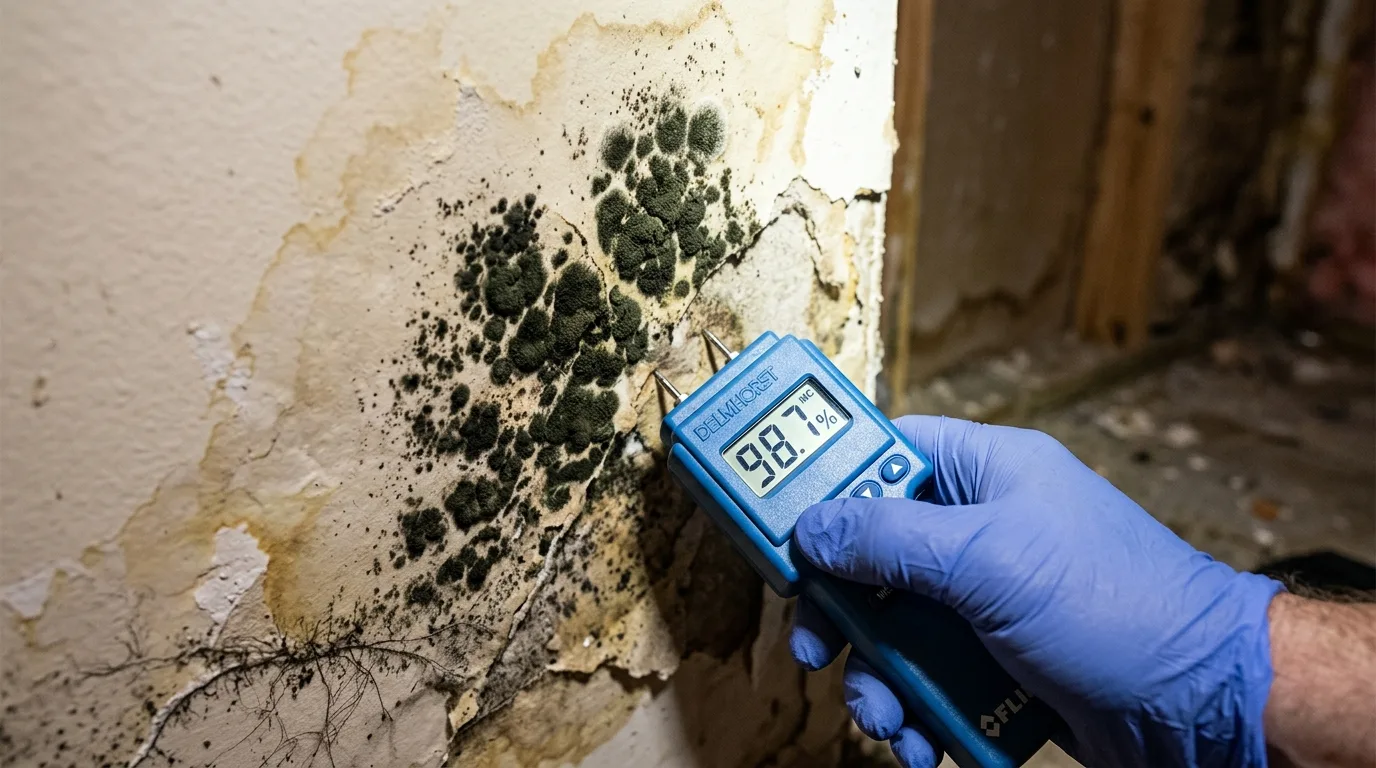
The 48-hour mold warning that restoration professionals cite is based on laboratory conditions at standard temperature and humidity. In Anderson, SC — a subtropical climate where summer relative humidity regularly exceeds 70% and temperatures routinely reach 90°F in July — mold doesn’t wait the full 48 hours. The warm, humid conditions that make Anderson a comfortable place to live year-round are also the conditions that allow mold spores to colonize wet surfaces in as little as 24 hours during peak summer months.
In this post, we cover what actually drives mold growth after water damage in Anderson’s specific climate, warning signs that mold has already developed, and the window of opportunity you have for preventing mold as part of water damage restoration rather than addressing it as a separate, more expensive remediation project.
Water Damage in Anderson? Fast Response Prevents Mold
Anderson Water Damage Pros extracts water within 60 minutes — giving you the maximum window to prevent mold development. Call (877) 698-1311.
Why Anderson’s Climate Accelerates Post-Water-Damage Mold
Mold growth requires four conditions: organic material to feed on, moisture, appropriate temperature, and oxygen. In Anderson’s climate, three of these four conditions are perpetually present at elevated levels. The average July high of 90°F and outdoor relative humidity consistently above 65% from June through September mean that any wet surface has warmth, moisture, and oxygen in abundance. The only variable is the organic material — and Anderson homes provide plenty of it in the form of wood framing, drywall paper facing, carpet, and insulation.
When water damage occurs in Anderson’s summer months, the post-water-damage mold window shrinks significantly compared to the conditions that produced the 48-hour standard. Building materials in Anderson homes already carry elevated baseline moisture content from the humid environment — their effective “buffer” before crossing into mold territory is smaller. A wall that needs to absorb X amount of water to reach mold threshold moisture levels starts closer to that threshold in Anderson than it would in Phoenix or Denver.
The Concord and Ashley Downs neighborhoods in northeast Anderson, and the older bungalows throughout the Downtown Historic District, typically have wood framing, wood subfloor, and paper-faced drywall — all highly susceptible organic materials. When water intrudes into these homes, mold has everything it needs within hours. Fast extraction and immediate deployment of commercial dehumidification is the only way to stay ahead of it.
What Happens During the 24–72 Hour Mold Window
Hours 0–6: Water is absorbed into porous materials — carpet, drywall, insulation, wood. No visible mold. This is when extraction has the highest impact — removing water before it fully saturates structural materials.
Hours 6–24: Moisture levels in saturated materials reach the threshold (above approximately 20% moisture content in wood, or above 60% relative humidity in air pockets within wall cavities) where mold spores can germinate. No visible mold yet, but conditions are optimal for germination.
Hours 24–48: In Anderson’s warm, humid conditions, germinated mold spores begin producing mycelium — the thread-like structures that constitute the main body of the mold colony. Faint musty odor may begin to be detectable. No visible growth on surfaces.
Hours 48–72: Visible mold colonies begin to appear on the most susceptible surfaces — drywall paper facing, carpet backing, insulation. Once visible mold is present, extraction and drying alone are no longer sufficient — mold remediation must be added to the restoration scope, significantly increasing total cost.
Warning Signs That Mold Has Already Developed
Musty odor during or after drying: A musty smell that appears during or after the drying phase of water damage restoration indicates mold development has begun in wall cavities or under flooring, even if surfaces appear clean.
Visible dark spotting on drywall: Black, gray, or greenish spotting that appears on drywall surfaces following a water event — particularly on the paper facing — indicates active mold colonization. This is not surface dirt or water staining.
Allergic symptoms in occupants: Unusual sneezing, watery eyes, or worsening respiratory symptoms in home occupants during or after a water damage event can indicate elevated airborne mold spore counts even before visible growth appears.
Discoloration under baseboards or flooring: Lifting a baseboard or floor transition strip and finding dark discoloration on the subfloor or wall material below indicates mold developing at the moisture accumulation points where water pooled.
Mold Developing After Water Damage in Anderson?
Call (877) 698-1311 for IICRC-certified mold assessment and remediation. We serve Anderson, Clemson, Easley, and all of Anderson County.
Prevention: How to Stay Inside the 48-Hour Window
Call for extraction immediately. In Anderson’s climate, the decision to wait until morning or until after the weekend ends your window before it has opened. Every hour of delay between the water event and extraction reduces the probability that drying alone will prevent mold development.
Deploy dehumidification simultaneously with extraction. Extraction removes bulk water, but moisture inside walls and structural materials requires active dehumidification to drive out. Commercial dehumidifiers that remove 70–100+ pints of moisture per day are required — household dehumidifiers are inadequate for this purpose. Anderson Water Damage Pros deploys commercial-grade equipment as part of every extraction response.
Don’t run HVAC or household fans. A common instinct after a water event is to run the air conditioning or set up box fans. In Anderson’s summer conditions, AC can actually slow interior drying by cooling surfaces to below the dew point, causing condensation. Household fans spread contaminated air and mold spores without generating the air velocity needed to dry structural materials. Only purpose-built drying equipment provides the correct air movement for effective structural drying.
Monitor daily with moisture meters. The only reliable way to know whether mold development has been prevented is to track moisture levels in structural materials daily and confirm they’re declining toward target levels. We provide daily moisture readings throughout the drying process as documentation for your insurance claim.
When Mold Remediation Is Needed After Water Damage
If mold has developed during or after a water damage event, it must be formally remediated following IICRC S520 protocols — it cannot simply be dried in place or surface-cleaned. Mold remediation requires containment to prevent spore spread during removal, HEPA-vacuuming and physical removal of affected materials, treatment of remaining structural surfaces with EPA-registered antimicrobials, HEPA air scrubbing, and post-remediation clearance testing.
Adding mold remediation to a water damage restoration project in Anderson typically adds $1,000–$3,000+ depending on the area affected. This is the direct financial consequence of a delayed response — a cost that is largely preventable with immediate professional extraction and drying. Our mold remediation service covers what the process involves and what it costs in Anderson County.
Frequently Asked Questions
How quickly can mold develop after water damage in Anderson in summer?
In Anderson’s peak summer conditions — July temperatures averaging 90°F high and outdoor humidity above 70% — mold colonization on wet organic surfaces can begin within 24 hours rather than the standard 48 hours cited in drier or cooler climates. If extraction and dehumidification are not initiated within the first 12–24 hours of a summer water event in Anderson, mold prevention as part of restoration becomes significantly less likely. This timeline is why we emphasize 60-minute emergency response — it matters most in summer.
Can I prevent mold after water damage myself in Anderson?
For very small water events — a minor appliance overflow of less than 2–3 gallons affecting a small tile floor area — homeowners can clean up effectively with towels, a mop, and a quality dehumidifier. Any event involving more than a few gallons, any water that reached carpet or drywall, or any situation where the water was not clean (gray water from appliances, or any water from outside) requires professional equipment and protocols to prevent mold development reliably in Anderson’s climate. See our full assessment in the water damage restoration guide for Anderson.
Does insurance cover mold remediation after water damage in Anderson?
Insurance coverage for mold after water damage depends on whether the mold resulted from a covered water damage event and whether you took reasonable steps to mitigate damage promptly. If mold developed because a covered pipe burst was addressed within 24–48 hours but mold still developed, most South Carolina homeowners insurance policies will cover the mold remediation as part of the broader water damage claim. If mold developed because you waited two weeks to address the water damage, coverage is less certain. Prompt action protects both your home and your insurance claim.
Related:
- Mold remediation in Anderson, SC
- Crawl space water damage in Anderson, SC
- Water damage restoration Anderson SC: complete guide
Fast Response Prevents Mold — Anderson Water Damage Pros
We extract water within 60 minutes and deploy commercial drying equipment immediately. Call (877) 698-1311 — 24/7 for Anderson and all of Anderson County.