Crawl Space Water Damage in Anderson, SC: Homeowner's Guide
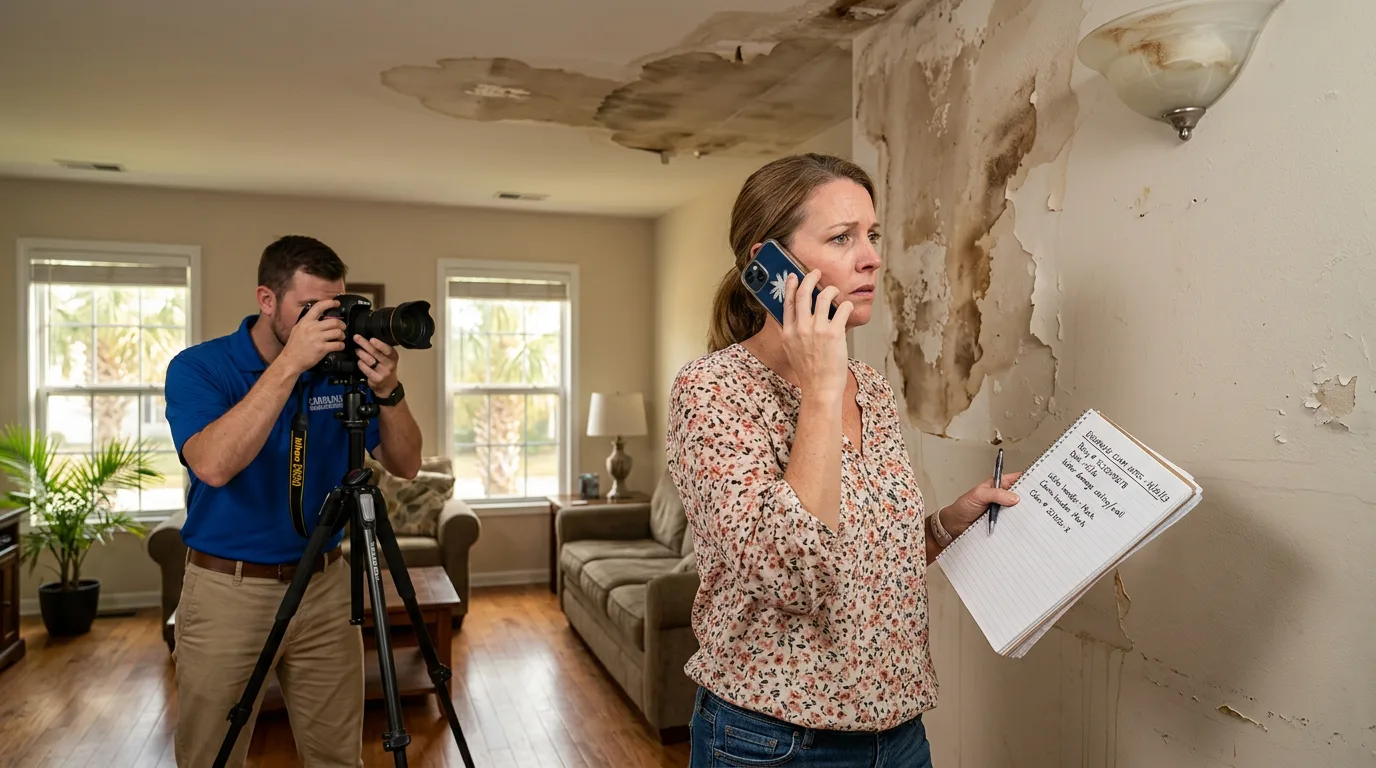
How many Anderson homeowners have an active moisture problem directly below their feet right now — and don’t know it? The answer is: a significant number, particularly in older homes throughout Anderson County built before crawl space encapsulation became standard practice. Crawl space water damage in Anderson is not always dramatic — it rarely involves standing water visible at inspection. More often it’s a chronic, slow-moving process: clay soil moisture evaporating upward into wood framing, day after day, week after week, until floor joists reach moisture levels that sustain mold growth and begin to compromise structural integrity.
In this post, we cover why Anderson County’s specific soil conditions create chronic crawl space moisture problems, how to identify crawl space water damage, and what the correct long-term solution looks like.
Free Crawl Space Inspection in Anderson County
We assess moisture levels and identify sources before recommending any solution. No pressure, no upsell. Call (877) 698-1311.
Why Anderson’s Clay Soils Drive Crawl Space Moisture
The soil beneath most of Anderson County is dominated by expansive clay and clay loam — the characteristic Piedmont soil of Upstate South Carolina. Clay soil is remarkable for its ability to hold water: it absorbs moisture during wet periods and releases it slowly through evaporation rather than drainage. Anderson County receives 48 inches of rain annually, meaning these clay soils spend much of the year near their saturation point.
The consequence for crawl space homes is constant: saturated clay soil directly below an unencapsulated crawl space continuously evaporates moisture upward. This is not a one-time event that can be corrected by pumping water out — it’s an ongoing process that continues as long as the soil surface is open to the crawl space air. In the Pendleton Historic District and older parts of West Anderson, homes built in the 1950s and 1960s typically have minimal or deteriorated vapor barriers that have allowed this process to continue for decades.
The shrink-swell behavior of Anderson County’s clay soils adds a second problem: as clay expands when wet and contracts when dry, it creates movement that shifts foundation walls, opens gaps at the foundation sill plate, and creates pathways for both water and humid air to enter the crawl space. Homes in the Northlake area near Lake Hartwell are particularly exposed because lakeside soil moisture levels remain elevated even during dry periods.
Signs of Crawl Space Water Damage in Your Anderson Home
Musty odor in lower rooms: Mold growing on crawl space framing produces volatile organic compounds that migrate into living spaces through subflooring gaps and HVAC systems. A persistent musty smell on lower floors or in lower-level closets is one of the first detectable signs.
High indoor humidity despite running AC: If your Anderson home’s interior humidity remains above 55–60% even with air conditioning running normally, crawl space moisture may be the source. The crawl space acts as a large humidifier — evaporating moisture that then rises into the living space.
Soft or springy areas in flooring: OSB and plywood subfloor in direct contact with elevated crawl space humidity eventually delaminates and loses strength. A floor area that feels soft or spongy — particularly near exterior walls or in areas over the crawl space — indicates subfloor moisture damage.
Visible mold on floor joists: During a crawl space inspection, visible black or gray mold on wood framing surfaces indicates that the wood’s moisture content has exceeded 20% for a sustained period. This is active structural degradation that requires immediate remediation.
Standing water after rain: Visible standing water in the crawl space following heavy rain — particularly common after spring thunderstorm events in Anderson — indicates the vapor barrier (if present) is failing and the drainage perimeter of the foundation is inadequate.
Crawl Space Problems in Anderson? We Fix Them Permanently
Drying, remediation, and full encapsulation for Anderson County homes — addressing the source, not just the symptom. Call (877) 698-1311.
The Correct Solution for Crawl Space Moisture in Anderson
Many Anderson homeowners get misled into thinking their crawl space problem was caused by a one-time event — a heavy rain, a plumbing drip — and that extracting that water will solve the problem. In Anderson County’s clay soil environment, that approach treats the symptom without addressing the source. The correct solution involves three components:
Component 1 — Dry the current damage. Commercial dehumidifiers and air movers deployed inside the crawl space remove current elevated moisture from structural materials. This phase typically runs 3–7 days and is verified by moisture meter readings, not visual inspection.
Component 2 — Remediate any existing mold. If mold has developed on floor joists or other framing, it must be properly remediated — HEPA-vacuumed, wire-brushed, and treated with EPA-registered antimicrobials — before encapsulation. Encapsulating over active mold traps it and allows continued growth.
Component 3 — Encapsulate to control ongoing moisture. A heavy-duty polyethylene vapor barrier (minimum 12 mil) is installed across the entire crawl space floor and up the foundation walls. Existing foundation vents may be sealed in favor of a conditioned crawl space approach that maintains sub-60% humidity through a dedicated dehumidifier. This is the only solution that addresses Anderson County’s clay soil moisture pathway permanently.
Full encapsulation is a one-time investment that provides 15–25 years of moisture control in Anderson’s climate. The alternative — continuing to address moisture events reactively — costs more in aggregate and allows progressive structural damage to accumulate.
Cost of Crawl Space Water Damage Restoration in Anderson
Crawl space drying in Anderson typically costs $800–$2,500 depending on the size of the space and the volume of moisture involved. Full crawl space encapsulation — including heavy-duty vapor barrier, vent sealing, and dedicated dehumidifier — runs $3,000–$8,000 for most residential crawl spaces in Anderson County. If mold remediation is required alongside encapsulation, add $1,500–$4,000 depending on the extent of growth on framing surfaces.
These costs compare favorably to the cumulative cost of ignoring crawl space moisture over time. Floor joist replacement in a single crawl space section — a common outcome in older Anderson homes that have had chronic moisture for years — typically runs $3,000–$8,000 for the repair alone, without the encapsulation that prevents recurrence. The long-term math strongly favors addressing the problem correctly and early rather than reactively.
Frequently Asked Questions
How do I know if my Anderson home’s crawl space has a moisture problem?
The most reliable approach is to have a professional inspect the crawl space with a calibrated moisture meter. Wood moisture content above 19% is the threshold below which mold will not grow — readings above this level in floor joists indicate an active moisture problem even without visible mold. Signs you can observe yourself include the musty odor signs described above, high indoor humidity, and any visible condensation on pipes in the crawl space during summer months. Our free crawl space inspections for Anderson County homeowners use both moisture meters and visual assessment to characterize the situation accurately.
Will the City of Anderson require permits for crawl space encapsulation?
The encapsulation itself typically does not require a permit in the City of Anderson. Modifications to the HVAC system — such as adding a conditioned air supply to the crawl space — may require permits from the Anderson Building Department at (864) 231-2217, filed through the online ViewPoint Cloud portal. Any structural modifications to the crawl space framing or foundation require permits. We advise on permit requirements during the assessment and assist with permit applications when needed.
How long does crawl space encapsulation last in Anderson’s climate?
A properly installed crawl space encapsulation system provides 15–25 years of effective moisture control in Anderson’s climate. The 12-mil vapor barrier is highly resistant to puncture and UV degradation, and the dedicated dehumidifier maintains humidity below 60% year-round — the threshold below which mold cannot establish. Annual inspections to verify the barrier is intact and the dehumidifier is operating correctly extend the system’s effective life significantly.
Related:
- Crawl space drying and encapsulation service
- Anderson SC basement & crawl space encapsulation: preventing moisture
- Mold after water damage: why 48 hours matters in Anderson
Anderson Crawl Space Moisture — Fix It Right
Drying, mold remediation, and full encapsulation for Anderson County homes. We address the clay soil moisture source — not just the symptom. Call (877) 698-1311.