Water Damage Restoration Anderson SC: Complete Homeowner Guide
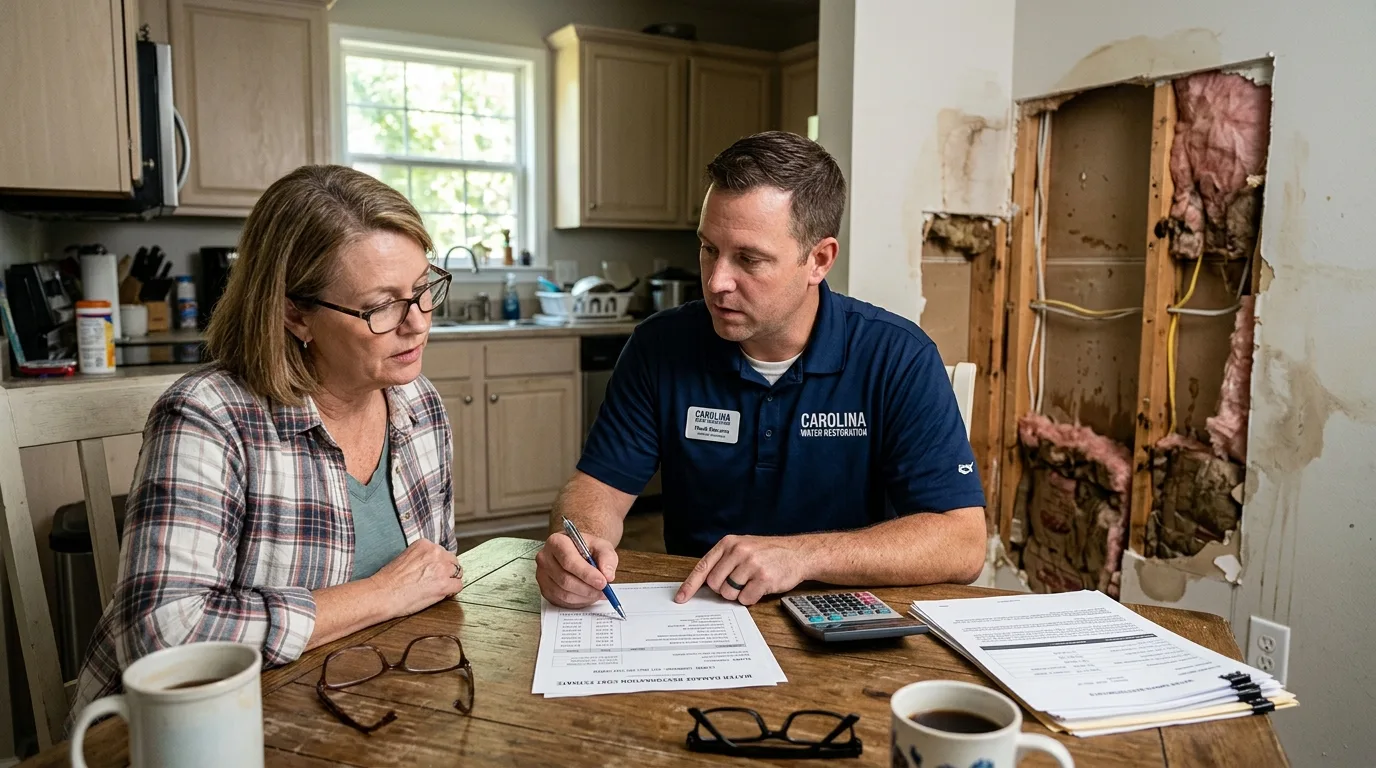
Every year, Anderson homeowners face water damage from burst pipes, storm flooding, appliance failures, and sewer backups — and most have no idea what the restoration process actually involves until they’re in the middle of it. This guide covers everything Anderson, SC homeowners need to know about water damage restoration: what happens during each phase, what it costs in this market, and how Anderson’s specific climate and soil conditions shape every restoration decision.
In this post, we cover the complete restoration process from emergency extraction through structural drying and mold prevention, what water damage restoration costs in Anderson County, and how to work effectively with your insurance company.
Water Damage in Anderson? Call Now for 24/7 Help
Anderson Water Damage Pros dispatches within 60 minutes — day or night, any day of the year. Call (877) 698-1311.
Why Water Damage Restoration Matters for Anderson Homeowners
Anderson, SC receives 48 inches of rainfall annually — a full 10 inches above the US average — and sits in a subtropical climate where summer relative humidity consistently exceeds 65%. These conditions mean that water damage escalates here significantly faster than in drier regions. What might be a manageable 48-hour window in a low-humidity climate becomes a 24-hour race in Anderson before mold begins colonizing wet surfaces.
Homeowners in the Northlake neighborhood near Lake Hartwell face an additional flood risk that most inland Upstate SC communities don’t share: the 56,000-acre lake creates localized flooding conditions along its tributaries when heavy spring rains and hurricane remnants push water levels up rapidly. Anderson County’s clay-dominant soils compound the problem by holding moisture against foundation walls and crawl space floors, creating a secondary moisture pathway that continues feeding humidity into structures long after the primary water event ends.
Prompt, professional water damage restoration in Anderson isn’t just about aesthetics — it protects structural integrity, prevents the mold colonization that Anderson’s humidity accelerates, and preserves your insurance claim documentation in the form insurers require.
Types of Water Damage in Anderson Homes
Clean water (Category 1): Water from a supply line, sink overflow, or appliance that has not become contaminated. The safest category and most straightforward to restore. Extraction and structural drying are typically sufficient.
Gray water (Category 2): Water from washing machine overflow, dishwasher discharge, or HVAC condensate that contains minor contamination. Requires antimicrobial treatment in addition to extraction and drying. Porous materials that absorbed gray water must be assessed for salvageability.
Black water (Category 3): Sewage, floodwater from outside, or any water that has mixed with soil, chemicals, or biological material. The most hazardous category. All porous materials that absorbed Category 3 water must be removed and disposed of — they cannot be reliably decontaminated in place. Full biohazard protocols, EPA-registered antimicrobials, and proper waste disposal are required.
The Complete Water Damage Restoration Process
Step 1 — Emergency response and assessment: IICRC-certified technicians arrive, assess the scope of damage, and document conditions for the insurance claim. Thermal imaging cameras identify water migration beyond the visible damage zone — water from a second-floor burst pipe routinely reaches below ceilings and inside walls that appear dry.
Step 2 — Water extraction: Truck-mounted extractors and submersible pumps remove all standing water. Residual moisture extraction from carpet, padding, and hardwood follows with specialized tools.
Step 3 — Structural drying: Commercial dehumidifiers and high-velocity air movers are deployed throughout the affected area. In Anderson’s humid climate, drying typically runs 3–5 days monitored by daily moisture meter readings.
Step 4 — Material removal: Wet drywall, saturated carpet, and compromised insulation that cannot be dried effectively in place are removed. This exposes structural materials for drying and assessment.
Step 5 — Cleaning and sanitization: Affected surfaces are cleaned and treated with EPA-registered antimicrobials appropriate to the water category.
Step 6 — Mold prevention and monitoring: Post-drying monitoring confirms target moisture levels are reached before equipment is removed.
Step 7 — Reconstruction: Removed materials are replaced — drywall, flooring, insulation — restoring the home to pre-loss condition. Permits from the City of Anderson Building Department are required for reconstruction work above certain values.
Free Water Damage Assessment in Anderson, SC
Call (877) 698-1311 or request online — we assess damage and provide an honest restoration plan for your Anderson County property.
Cost of Water Damage Restoration in Anderson
Water damage restoration in Anderson typically costs $2,044–$2,159 for an average affected area of approximately 215 square feet, or $10–$11 per square foot. This breaks down to labor at $1,425–$1,488 and materials at $619–$671 on average for standard Category 1 or Category 2 events.
Factors that increase cost in Anderson County:
- Category 3 water: Sewage and floodwater events cost significantly more due to biohazard protocols and mandatory material removal.
- Crawl space involvement: Older Anderson homes with unencapsulated crawl spaces require additional equipment and time due to clay soil ground moisture.
- Delayed response: Every hour of delay allows water to migrate further and increases the likelihood of mold remediation being added to the project.
- Mold development: If mold is present by the time restoration begins, add $1,000–$3,000+ depending on the area affected.
- Reconstruction scope: The more material that requires replacement — drywall, flooring, insulation — the higher the total cost.
The national range for water damage restoration is $1,300–$5,600. Anderson pricing sits at the lower end of this range for standard events, though significant flooding events can exceed the national average. Use our free cost calculator for a preliminary estimate based on your specific situation.
Insurance Claims for Water Damage in Anderson
Standard homeowners insurance in South Carolina covers sudden and accidental water damage — a burst pipe, an appliance that fails unexpectedly, a roof leak caused by a covered storm event. Standard policies typically do not cover:
- Flooding from rising surface water or Lake Hartwell overflow (requires separate flood insurance)
- Gradual leaks that the homeowner was aware of and didn’t repair
- Sewer backup (unless a specific rider was purchased)
- Mold that resulted from neglect rather than a covered water event
Document everything before any cleanup begins. Photograph standing water, affected materials, and any visible damage from multiple angles. Your insurer needs this evidence to process the claim. Most Anderson homeowners insurance companies respond to water damage claims within 24–72 hours. An insurance claim guide for South Carolina covers the specific steps Anderson homeowners should follow.
Frequently Asked Questions
How quickly can water damage restoration begin in Anderson?
Emergency water extraction can begin within 60 minutes of your call to Anderson Water Damage Pros for most locations in Anderson and Anderson County. Structural drying equipment is deployed the same day as extraction. The sooner the restoration process begins, the lower the total cost and the lower the mold risk — both of which are particularly relevant in Anderson’s humid climate.
Should I try to clean up water damage myself before professionals arrive?
Remove valuables, electronics, and documents from the affected area. Move furniture off wet carpet if possible. Do not use household fans or run the HVAC to try to dry the space — this can spread contamination and does not address moisture inside walls and structural materials. Do not attempt to clean up sewage backup without proper protective equipment. The most important action is calling for professional extraction as quickly as possible.
How do I find out if I have mold after water damage in Anderson?
The most reliable indicators are a persistent musty odor after drying is supposedly complete, visible dark spotting on walls or ceilings, and ongoing allergy or respiratory symptoms in home occupants. In Anderson’s climate, mold can develop inside wall cavities and under flooring without being immediately visible. See our full guide on mold after water damage in Anderson for signs to watch for.
Related:
- What to do when a pipe bursts in your Anderson home
- How to file a water damage insurance claim in South Carolina
- Hidden water damage signs in Anderson homes
Anderson Water Damage Pros — Your Complete Restoration Partner
IICRC certified, insurance-direct billing, 24/7 emergency response. Call (877) 698-1311 for immediate help anywhere in Anderson County.