Understanding Water Categories: Clean, Gray, and Black Water in Anderson, SC
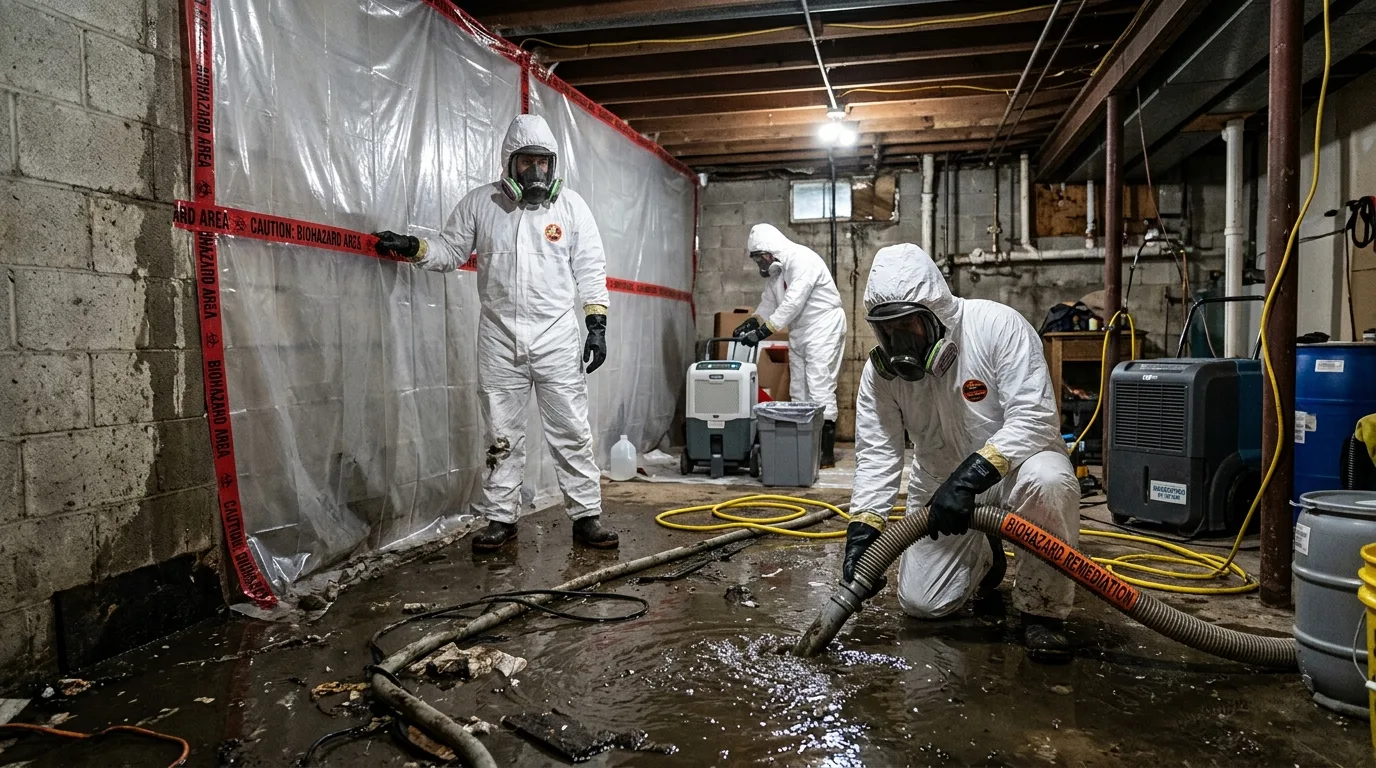
Not all water damage is the same — and the difference between the three water categories isn’t academic. The category of water that damaged your Anderson home determines the cleanup protocols required, whether porous materials can be dried or must be removed, what health risks exist for occupants, and how much the restoration will cost. Homeowners who don’t understand this often make dangerous mistakes: using household fans to dry out a Category 3 sewage event, trying to salvage carpet that absorbed gray water, or failing to wear any protective equipment when entering a contaminated space.
In this post, we explain what the three water categories mean, how to identify which category you’re dealing with, and what each category requires for safe and effective restoration in Anderson, SC.
Water Damage in Anderson? We Identify the Category and Respond Appropriately
Anderson Water Damage Pros uses IICRC protocols for all water categories. Call (877) 698-1311 — 24/7 emergency response.
Category 1: Clean Water
Category 1 water comes from a sanitary source and poses no significant health threat in its original state. This is the least hazardous category and the one where the most material can be salvaged with appropriate drying.
Common sources in Anderson homes:
- Supply line failures (water line from the meter to fixtures)
- Toilet tank overflow (the tank, not the bowl — bowl water is Category 2 or 3)
- Appliance supply lines to refrigerator ice makers or dishwashers
- Faucet overflow
- Roof leak from rain (when no contamination has occurred)
What restoration involves for Category 1: Extraction of standing water, followed by structural drying with commercial dehumidifiers and air movers. Salvageable materials like hardwood flooring and some carpet can potentially be dried in place if extraction begins quickly enough. Documentation and monitoring throughout the drying phase.
Important caveat for Anderson: Category 1 water that sits for more than 24–48 hours in Anderson’s humid conditions degrades toward Category 2 as microbial growth begins in standing water. What starts as a clean water event can become a more expensive Category 2 event if not addressed immediately.
Category 2: Gray Water
Category 2 water contains significant contamination from chemical or biological sources and poses a risk of illness if contact occurs. It’s not immediately dangerous in the way that sewage is, but it’s not safe to drink or to have skin contact with, and materials it saturates require more aggressive treatment.
Common sources in Anderson homes:
- Washing machine discharge
- Dishwasher overflow
- Toilet bowl water (not containing feces)
- Aquarium leaks
- Waterbed leaks
- AC condensate water (can contain microbial growth)
- Sump pump failures that overflowed with ground water mixed with minor contaminants
What restoration involves for Category 2: Extraction followed by antimicrobial treatment of all affected surfaces. Porous materials that absorbed Category 2 water — carpet, padding, drywall — must be assessed case by case. Heavily saturated materials in Anderson’s humidity are typically removed rather than dried, because reliable decontamination of deeply saturated porous materials is not achievable. Structural materials are cleaned, disinfected, and dried. Technicians use appropriate PPE.
Category 2 or Category 3 Water Damage in Anderson?
Proper protocols matter — don't risk your family's health with incorrect cleanup. Call Anderson Water Damage Pros at (877) 698-1311.
Category 3: Black Water
Category 3 water is grossly contaminated — containing pathogenic agents, toxic substances, or biological materials that can cause serious illness or death. It requires full biohazard protocols from the moment the restoration team arrives.
Common sources in Anderson homes:
- Sewage backup from main sewer line or septic system
- Toilet overflow containing feces
- Rising floodwater (even clear-looking floodwater from outside contains Category 3 contamination from soil, chemicals, and biological material)
- Water from Lake Hartwell during flooding events
- Water containing sewage that has contaminated Category 1 or 2 water
What restoration involves for Category 3: This is the category with the most non-negotiable requirements. All porous materials that absorbed Category 3 water — carpets, carpet padding, drywall, insulation — must be removed and disposed of as regulated waste. There is no effective way to decontaminate deeply saturated porous materials from Category 3 water. Non-porous structural materials (concrete, ceramic tile, metal) are treated with EPA-registered antimicrobials at appropriate contact times. Technicians wear full PPE including respirators, Tyvek suits, and nitrile gloves. Negative air pressure containment prevents contaminated air from spreading to unaffected areas.
In Anderson’s warm, humid climate, Category 3 events have a dramatically shortened window before mold begins developing on the contaminated materials that must be removed — another reason immediate professional response is critical.
How Water Category Affects Cost in Anderson
Category 1 water damage restoration in Anderson averages $2,044–$2,159 for a standard 215-square-foot event — this is the baseline figure most homeowners see quoted.
Category 2 events cost more due to antimicrobial treatment requirements and the higher likelihood that porous materials will need removal rather than drying. A Category 2 event of equivalent size typically runs 20–40% more than a comparable Category 1 event.
Category 3 events cost significantly more — often 50–100%+ above Category 1 costs — because of mandatory porous material removal and disposal, additional PPE and containment requirements, and the extended antimicrobial treatment protocols required. A sewage backup event that affects a bathroom and adjacent hallway in an Anderson home can run $3,000–$7,000 even for a relatively contained event, compared to $2,000–$3,000 for a clean water event of similar size.
Practical Tips for Anderson Homeowners
Do not enter any area affected by Category 2 or Category 3 water without protective equipment — at minimum nitrile gloves, waterproof boots, and ideally a respirator. Do not attempt to clean up sewage backup with household cleaning products — they are not EPA-registered for this purpose and will not achieve adequate pathogen reduction.
If you’re unsure of the water category, assume it’s Category 2 or higher until a professional assessment confirms otherwise. Water from outside the home — including rainwater runoff, floodwater, or any water that has been in contact with soil — is Category 2 or 3 regardless of how clean it looks. See our flood damage cleanup service for more on handling outside water events.
Frequently Asked Questions
How do I know what category of water damaged my Anderson home?
The source of the water is the primary indicator. Supply line break or toilet tank overflow: Category 1. Washing machine overflow or HVAC drain: Category 2. Sewage backup, toilet bowl overflow with feces, or any water from outside the home: Category 3. When in doubt, treat the water as the higher category — the health risk of underestimating contamination is far greater than the additional cost of treating Category 1 water with Category 2 protocols.
Can Category 3 water become safe if it dries in Anderson?
No. Drying Category 3 water does not decontaminate materials — it concentrates the pathogens and biological material that was in the water onto the surfaces where it dried. Organic material in dried sewage remains a health hazard and a mold substrate. Materials that absorbed Category 3 water and were not properly removed and replaced remain a contamination source regardless of how dry they appear. This is why porous material removal is non-negotiable for Category 3 events.
Does insurance cover Category 3 sewage cleanup in Anderson?
Standard homeowners insurance may cover sewage backup if you purchased a sewer backup rider — many standard South Carolina homeowners policies exclude sewer and drain backup unless this endorsement was specifically added. If the sewage backup resulted from a covered pipe failure rather than a standalone sewer system failure, coverage is more likely. We help document the cause and extent of all sewage events thoroughly to support whatever insurance coverage may apply. See our insurance claim guide for South Carolina specifics.
Related:
- Sewage cleanup in Anderson, SC
- Flood damage cleanup in Anderson, SC
- Mold after water damage: why 48 hours matters in Anderson
Every Water Category. Every Anderson County Address.
Anderson Water Damage Pros uses IICRC-standard protocols for all water categories — Category 1 clean water through Category 3 sewage. Call (877) 698-1311, 24/7.